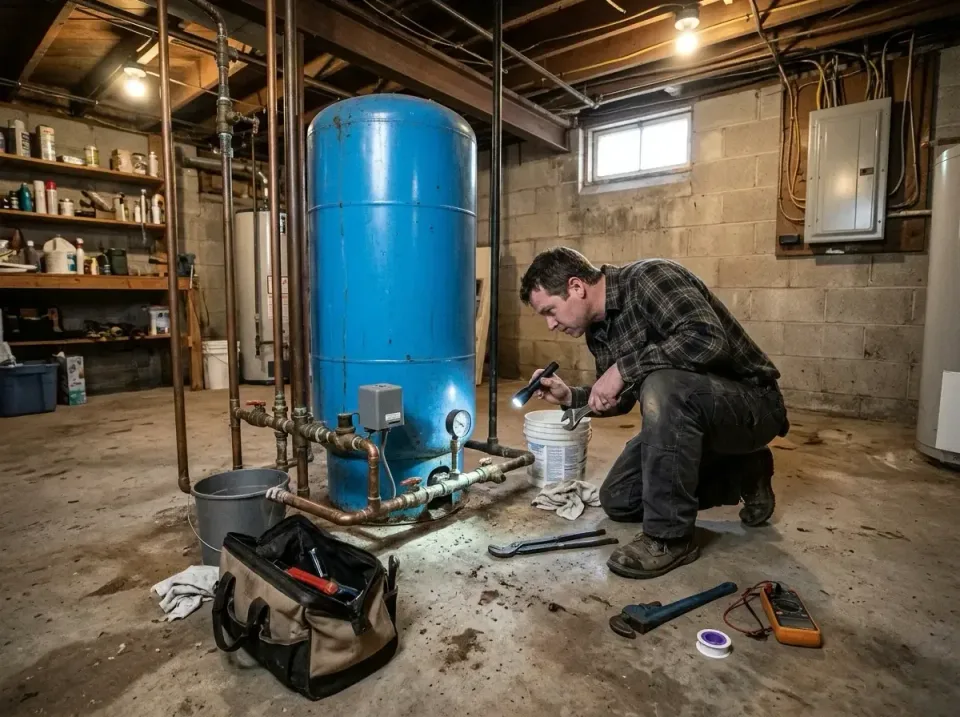
Well Pump Repair
Well pump repairs for Georgia homes include pump-depth and failed-component diagnosis; typical repairs run $300–$1,500, driven by pump depth and parts.
When pressure drops throughout the house, the cause may be a failing regulator, a leak, a restricted supply line, or a problem with a well system. Start by checking whether every fixture is affected and whether the change followed a specific event.
Georgia conditions can add useful clues. In North Georgia, hard freezes can damage exposed or unheated plumbing; check vulnerable areas for leaks after a cold snap.
Near the coast, storm surge exposure makes it important to look for signs of water intrusion and arrange a safe inspection after severe weather. Summer heat can also raise outdoor water use, so irrigation running at the same time may make household flow feel weaker.
Record what changed before adjusting equipment. We use that history to guide testing, not guesswork.
A sudden, house-wide pressure drop usually points to a shared supply problem rather than one faucet. First, check whether cold and hot water are both affected, then note if the change is constant or happens only when another fixture runs.
A pressure gauge reading at the home’s supply can help separate a low incoming supply from a restriction inside the plumbing. We test before recommending a repair; a number alone does not tell us whether a valve, pipe, or supply source is at fault.
Heavy rainfall can saturate soil around buried water lines. If pressure falls after prolonged rain, watch for unusually wet ground or a change in the meter when fixtures are off, and report those observations rather than digging near a service line. Around the Georgia State Capitol in Atlanta, as in other established parts of Georgia, the property’s actual plumbing layout not its location alone determines the next diagnostic step.
If every fixture weakens at once, have the main shutoff and incoming supply checked before assuming several faucets failed together. A single slow fixture may instead point to a local obstruction.
Homes near the University of Georgia in Athens can include a mix of plumbing layouts; the age and material of the particular service line matter more than a broad regional assumption. We inspect accessible components and compare pressure at useful points so the repair addresses the failure, not just its symptom.
Georgia Southern University in Statesboro offers another local reference point, but water systems vary from property to property there too. A shared drop can follow a utility-side issue, a damaged line, or a restriction after the meter.
Our crew asks when the pressure changed and whether any plumbing work occurred beforehand. If a leak is suspected, avoid opening walls or excavating until the likely route is assessed.
You can safely compare several taps, pause irrigation, and look for visible leaks. Stop there if pressure remains low across the home, a pipe is actively leaking, or the pump runs continuously.
Those symptoms call for measured testing and inspection, not repeated adjustments to a regulator. See our guide to weak water pressure at upstairs faucets if upper-level fixtures are the main concern.
Atlanta-area elevation can bring occasional winter ice, so check exposed plumbing for damage after a freeze rather than turning valves forcefully. In South Georgia, generally milder winters do not eliminate the possibility of leaks or supply problems; a sudden change still deserves a property-specific check. Tallulah Gorge State Park is a reminder of how varied Georgia’s terrain is, and elevation differences can shape what a plumber investigates at an individual home.
We start by documenting which fixtures are affected, checking accessible shutoffs, and measuring pressure under controlled conditions. Then we look for evidence of a leak, a restricted line, or a failing pressure-control component.
If the home uses a private well, the pump and related controls need their own assessment. A booster should not be installed simply because the water feels weak; the underlying supply and demand need to be understood first.
For a practical overview of the process, see Water Pressure Testing. Our Georgia-licensed plumbing professionals explain what the readings suggest and confirm the work scope before repairs begin. That measured approach helps avoid replacing a sound part while the real restriction remains.
The right repair depends on where pressure falls and what the system uses; these options address different failure points.
| Option | Best for | Key detail |
|---|---|---|
| Pressure regulator repair | Incoming pressure control that is failing | A pressure gauge rated 0–200 psi can help assess supply readings. |
| Booster pump installation | A system with inadequate supply pressure after diagnosis | Pump capacity must match the needed gallons per minute and pressure demand. |
| Well pump and tank repair | Weak flow or repeated pump operation on a private well | Well pressure tanks commonly range from 20–80 gallons. |
| Water line leak repair | Water loss from a damaged supply line | Repair location and access determine the work involved. |
| Clogged supply line repair | A restriction that limits flow through the pipe | Supply piping commonly ranges from ½-inch to 1-inch. |
Frequent summer thunderstorms can briefly interrupt power, which matters if a home relies on electrically operated well equipment. Near Cumberland Mall in Atlanta, traffic or site access can shape when a plumber can reach the property; around Macon’s Ocmulgee Mounds National Historical Park, the same careful diagnosis applies. Storm debris may also delay utility or repair access, so report any immediate leak or safety concern when arranging service.
Pro tip: A pressure reading means little without knowing whether water was flowing when it was taken. We compare the system’s behavior under the right conditions, then consider fixture use and elevation before advising on a regulator or pump.
At a private well, drought can strain available supply, so repeated weak flow may need a well-system assessment rather than a pressure adjustment. Inland areas generally avoid direct storm surge, but that does not rule out other causes of a home-wide pressure change.
If you are near Martin Luther King Jr. National Historical Park in Atlanta, give the plumber clear access to the meter and accessible pressure controls so testing can proceed without guesswork.
Common mistake: Turning a regulator without recording the original setting can hide the symptom without fixing the cause.
Note when pressure changes and which fixtures are running.
Yes, a drop that appears only while another appliance uses water can point to a supply limitation or restriction that becomes noticeable under demand. Heavy rain can saturate soil around buried lines, so mention recent rainfall and any unusually wet areas when arranging a line inspection.
A pressure test is typically $75–$200, with access and fixture count affecting the work. Readings in pounds per square inch help compare conditions, while the plumber’s findings determine whether a regulator, restriction, or leak needs attention.
Yes, you can compare multiple taps, pause outdoor water use, and look for visible leaks, but avoid adjusting a pressure-control valve or opening buried lines. If the drop persists throughout the house, Georgia Plumbing Pros can test the system and explain the likely cause before work begins.
Plumbing work in Georgia is subject to the Georgia State Minimum Standard Plumbing Code, 2024 edition, and applicable local requirements. For work in Atlanta, ask whether a permit through the Atlanta Office of Buildings applies to the planned repair.
Pressure Regulator Repair if pressure surges after a sudden drop?
Not until testing shows the regulator is the cause; surging can also reflect another supply or plumbing problem. In areas such as Athens downtown, where properties can have different plumbing configurations, record when the surge occurs and have the system assessed rather than changing the setting yourself.
A pressure drop throughout the home is a reason to check the shared supply, controls, and lines before replacing fixtures. If the problem continues, note which taps are affected and whether the drop began after a storm, plumbing work, or a change in water use.
Along the Georgia coast, hurricane season runs June through November, so homeowners should consider access and visible water intrusion when arranging a post-storm inspection. The Atlanta Botanical Garden is a familiar local landmark, but pressure problems need a diagnosis based on the property itself.
Savannah Historic District homes also illustrate why plumbing layout and condition matter more than assumptions. For measured testing and clear repair options, contact Georgia Plumbing Pros about low water pressure.
Yes, a drop that appears only while another appliance uses water can point to a supply limitation or restriction that becomes noticeable under demand. Heavy rain can saturate soil around buried lines, so mention recent rainfall and any unusually wet areas when arranging a line inspection.
A pressure test is typically $75–$200, with access and fixture count affecting the work. Readings in pounds per square inch help compare conditions, while the plumber’s findings determine whether a regulator, restriction, or leak needs attention.
Yes, you can compare multiple taps, pause outdoor water use, and look for visible leaks, but avoid adjusting a pressure-control valve or opening buried lines. If the drop persists throughout the house, Georgia Plumbing Pros can test the system and explain the likely cause before work begins.
Plumbing work in Georgia is subject to the Georgia State Minimum Standard Plumbing Code, 2024 edition, and applicable local requirements. For work in Atlanta, ask whether a permit through the Atlanta Office of Buildings applies to the planned repair.
Not until testing shows the regulator is the cause; surging can also reflect another supply or plumbing problem. In areas such as Athens downtown, where properties can have different plumbing configurations, record when the surge occurs and have the system assessed rather than changing the setting yourself.
Browse all nationwide service options and choose the right fit for your project.
Well pump repairs for Georgia homes include pump-depth and failed-component diagnosis; typical repairs run $300–$1,500, driven by pump depth and parts.
We install residential booster pumps sized to household demand, including pump capacity and electrical work; typical installation runs $800–$2,500.
We repair or replace home pressure regulators, including accessible valve assemblies; typical repairs run $250–$600 depending on valve condition and parts.
Low cold-water pressure service for homeowners includes checking cold-side valves and accessible piping. Typical repair costs depend on parts, pipe condition, and access.
Water Pressure Testing compares gauge readings and fixture flow for Georgia homeowners; a typical test is $75–$200, depending on access and fixture count.
We trace sudden home pressure loss, including meter and buried-line issues; access and excavation needs shape the repair scope and cost.
Whole-house pressure diagnosis for homeowners includes checking the main supply and accessible piping; repair scope and access shape the cost, with final quotes based on site conditions.
We diagnose weak showers for homeowners, including showerhead and supply-side restrictions; typical repairs run $150–$500, depending on access and parts.
We repair leaking residential water lines, including buried sections; typical jobs run $300–$2,000, depending on leak location and excavation access.
Clogged water line repair clears or corrects restricted residential piping, with the work scope and access affecting a typical $300–$1,500 job.
We diagnose weak kitchen and bathroom faucets, including accessible fixture connections. Typical repair runs $100–$350, depending on faucet condition and access.
We trace fluctuating home pressure through fixture and system checks; repair scope depends on the cause, access, and parts required.
We trace weak flow between the municipal meter and home, checking accessible service-line connections; saturated soil after rain can complicate access near Macon's Ocmulgee Mounds National Historical Park, and storm d...
Low hot-water pressure service for Georgia homes includes tracing restricted hot-side flow and checking accessible fixtures; typical repairs run $150–$600, depending on access and parts.
Well pressure tank repair for Georgia homes includes tank and connection work; final cost depends on tank size, parts, access, and site conditions.
We repair residential booster pumps, checking controls, pressure switches, and accessible connections; repair scope and parts determine the final cost.
We repair residential softener valves, bypasses, and resin-bed restrictions; typical jobs may run $150–$600 depending on parts and access.
Tankless water pressure repair checks restricted heater passages and connections; the quote depends on access, parts, and the condition of the unit.
Water Filter Pressure Repair clears restricted cartridges and housings for Georgia homes; typical repairs run $150–$500, depending on filter type and access.
Upper-floor pressure diagnosis for Georgia homes includes comparing flow at fixtures on different levels; access and the cause determine the repair scope and price.
Select a city to find local low water pressure repair providers we cover in Georgia.
Share your job scope for low water pressure repair in Georgia — we will review fit and pricing before scheduling.