Well Pump Repair in Midway, GA
Well pump repairs for Midway, GA homes include pump-depth and failed-component diagnosis; typical repairs run $300–$1,500, driven by pump depth and parts.
Heavy rain around Midway can saturate soil beside buried water lines, so a new pressure drop deserves a line check rather than a guess. Our crew tests before recommending a repair.
Seasonal rainfall can also affect groundwater and well performance; if a well-fed home near Midway Museum develops weak flow, note whether the change follows dry or wet weather. That detail helps us narrow the diagnosis. At Midway City Hall, Midway City Park, or a home farther out, we check pressure at more than one fixture and explain what the readings show.
Raised coastal foundations and wood-frame houses can place plumbing access in different locations, so we confirm access before work begins. We serve Midway, including Crossroads, and coordinate dispatch from Midway, GA without treating the headquarters as your service area.
Our team will explain the likely cause and repair options before starting. Call (877) 773-0781 to arrange low-pressure service in Midway.
Well pump repairs for Midway, GA homes include pump-depth and failed-component diagnosis; typical repairs run $300–$1,500, driven by pump depth and parts.
We install residential booster pumps sized to household demand, including pump capacity and electrical work; typical installation runs $800–$2,500.
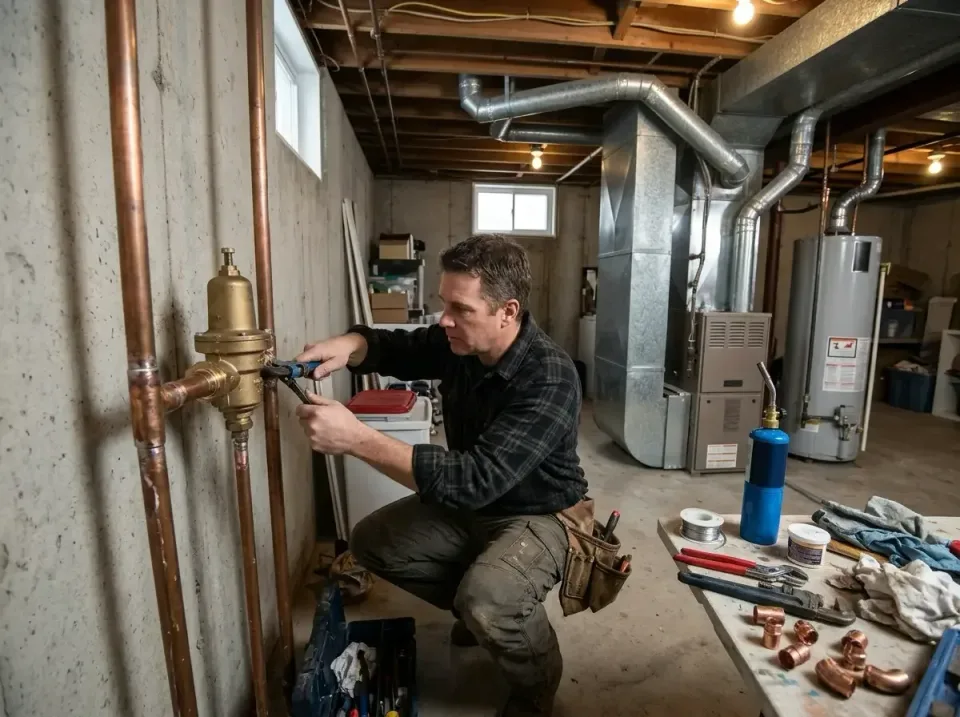
We repair or replace home pressure regulators, including accessible valve assemblies; typical repairs run $250–$600 depending on valve condition and parts.
Low cold-water pressure service for homeowners includes checking cold-side valves and accessible piping. Typical repair costs depend on parts, pipe condition, and access.
Water Pressure Testing compares gauge readings and fixture flow for Midway, GA homeowners; a typical test is $75–$200, depending on access and fixture count.
We trace sudden home pressure loss, including meter and buried-line issues; access and excavation needs shape the repair scope and cost.
Whole-house pressure diagnosis for homeowners includes checking the main supply and accessible piping; repair scope and access shape the cost, with final quotes based on site conditions.
We diagnose weak showers for homeowners, including showerhead and supply-side restrictions; typical repairs run $150–$500, depending on access and parts.
We repair leaking residential water lines, including buried sections; typical jobs run $300–$2,000, depending on leak location and excavation access.
Clogged water line repair clears or corrects restricted residential piping, with the work scope and access affecting a typical $300–$1,500 job.
We diagnose weak kitchen and bathroom faucets, including accessible fixture connections. Typical repair runs $100–$350, depending on faucet condition and access.
We trace fluctuating home pressure through fixture and system checks; repair scope depends on the cause, access, and parts required.
We trace weak flow between the municipal meter and home, checking accessible service-line connections; saturated soil after rain can complicate access near Macon's Ocmulgee Mounds National Historical Park, and storm d...
Low hot-water pressure service for Midway, GA homes includes tracing restricted hot-side flow and checking accessible fixtures; typical repairs run $150–$600, depending on access and parts.
Well pressure tank repair for Midway, GA homes includes tank and connection work; final cost depends on tank size, parts, access, and site conditions.
We repair residential booster pumps, checking controls, pressure switches, and accessible connections; repair scope and parts determine the final cost.
We repair residential softener valves, bypasses, and resin-bed restrictions; typical jobs may run $150–$600 depending on parts and access.
Tankless water pressure repair checks restricted heater passages and connections; the quote depends on access, parts, and the condition of the unit.
Water Filter Pressure Repair clears restricted cartridges and housings for Midway, GA homes; typical repairs run $150–$500, depending on filter type and access.
Upper-floor pressure diagnosis for Midway, GA homes includes comparing flow at fixtures on different levels; access and the cause determine the repair scope and price.
Midway Museum sits among the area’s reminders of Colonial-era history, while Midway’s coastal thunderstorms can leave storm debris that delays utility or repair access. We plan access with that possibility in mind and confirm a workable visit window.
We test pressure, explain the findings in plain language, and confirm the repair scope before work begins. Summer heat can increase outdoor water use, so we ask whether low flow affects indoor fixtures, outdoor taps, or both.
During frequent summer storms, brief outages may interrupt powered equipment; tell our scheduler if your well system stopped during an outage. Our team coordinates routing for Midway appointments and lets property owners know what to prepare.
When a shower weakens as a faucet runs, compare the fixtures one at a time; simultaneous demand may expose a supply limitation. Midway’s hot, humid summers increase plumbing-system demand, so our crew checks whether the drop is isolated or affects the whole house before recommending work. Homeowners near Midway City Park can note whether cold and hot fixtures behave differently.
A sudden drop at every tap calls for a different diagnosis than an upstairs faucet that barely flows. Atlantic hurricane season runs June through November, and coastal storm-surge exposure makes it sensible to check for water intrusion after severe weather rather than assume the pressure change is a pump fault.
We test multiple fixtures and inspect accessible supply components. Check whether the main shutoff is fully open; if pressure remains low, our Midway team can investigate.
Drought can strain private wells, so a Midway property with weak flow after a dry stretch may need its supply system checked before anyone adjusts equipment. Near Fort Morris Historic Site, our team asks whether the problem began gradually or followed a change in weather, then tests pressure and flow at multiple fixtures.
Tropical systems can bring coastal flooding and outages. If water reached plumbing equipment, do not restart wet electrical components; our crew can inspect the accessible system and identify a safe next step.
Midway’s generally milder South Georgia winters do not rule out cold snaps, so we still check exposed pipe locations when a pressure complaint follows a chill. Tell us which fixtures are affected and when the change began; that history helps focus the visit.
Title 12, Chapter 5, also governs public drinking-water protections. Those rules matter when work changes potable-water piping or connected equipment. Near Midway Public Library, the same state requirements apply as elsewhere in Midway.
The International Plumbing Code sets requirements for pressure-reducing valves, so a valve adjustment or replacement must preserve safe system operation. Permit and inspection needs depend on the specific work and the authority serving the property; do not assume an Atlanta Office of Buildings permit process applies locally. Skipping a required permit or inspection can leave work undocumented and create problems during later repairs or property transactions.
Get a clear diagnosis and repair options from a team that works across Georgia.
The company has served Georgia homeowners for 10 years. Experience with older homes and changing water systems helps the team consider regulators, leaks, well systems, and supply-line issues instead of guessing.
The team coordinates appointments across Georgia and confirms your symptoms and service location before dispatch. That conversation helps prepare for the visit and keeps the work focused on the pressure concern you reported.
The visit moves from symptom review to pressure testing and a clear repair plan.
Confirm Details
The team confirms your symptoms and service location before dispatch. You can describe where pressure is weak and when it happens, helping the technician arrive prepared to investigate the reported issue.
Test Pressure
The technician records static and flowing pressure, checks multiple fixtures, and confirms whether your water comes from a municipal supply or a well. You get test findings that help narrow the source.
Verify Results
After the repair, the technician checks pressure at multiple fixtures and compares how the system performs. You can see whether water flow has improved across the areas included in the work.
Faucets filling containers more slowly than usual can be an early sign of reduced flow. Notice whether the change happens at several sinks or just one; that detail can help distinguish a fixture issue from a broader pressure concern.
A washing machine or dishwasher taking longer to fill may point to restricted water flow. Note whether other fixtures seem affected too, since a pattern across the home is useful information when assessing pressure.
A toilet tank that takes longer than usual to refill can signal reduced flow to that fixture. If the change appears alongside other small flow changes, keep track of which areas are affected before arranging an assessment.
Spring rain can leave Midway yards and access areas damp, so note any visible changes near exposed plumbing before a visit. A pressure check can help assess flow and identify whether a plumbing repair is needed, without relying on seasonal assumptions.
Coastal thunderstorms can disrupt water service or affect well-system power. If flow changes after a storm, an assessment can help separate a temporary supply interruption from a plumbing or pump-control concern.
Hurricane exposure makes it useful to check water flow after severe weather has passed and service is stable. A technician can test pressure and explain whether the issue points to the home’s plumbing, its water source, or another part of the system.
Midway winters are mild but damp, and moisture around plumbing can make visible changes worth checking. If pressure is persistently reduced, a professional assessment can help identify the cause and determine whether repair is appropriate.
Permit requirements depend on the work and local rules. Ask the provider to clarify whether a permit applies and who handles it, so you understand the approvals involved before agreeing to the repair.
Ask which inspection and repair tasks are included, and what would count as additional work. A defined scope makes it easier to compare options and understand what the technician plans to address before work begins.
Before approving work, ask how the scope, any changes, and payment terms are documented. Reviewing the agreement in advance helps you understand what you are authorizing and how decisions are handled if the planned work changes.
Request a quote online or contact our Midway, GA team directly by phone or email.
Check that the main shutoff is fully open and note whether several fixtures are affected. If the drop began after heavy rain or a storm, share that timing with our crew; saturated soil or storm-related access issues can shape what we inspect.
Elevation and simultaneous water use can affect readings, so compare the upstairs faucet with other fixtures when no one is using water elsewhere. Our team tests at multiple points to distinguish a localized restriction from a broader supply problem.
Yes. We take pressure readings, check more than one fixture, explain the likely cause in plain language, and confirm the scope with you before work begins.
Low Water Pressure Repair is also available in these nearby communities across Georgia.