Well Pump Repair in Byron, GA
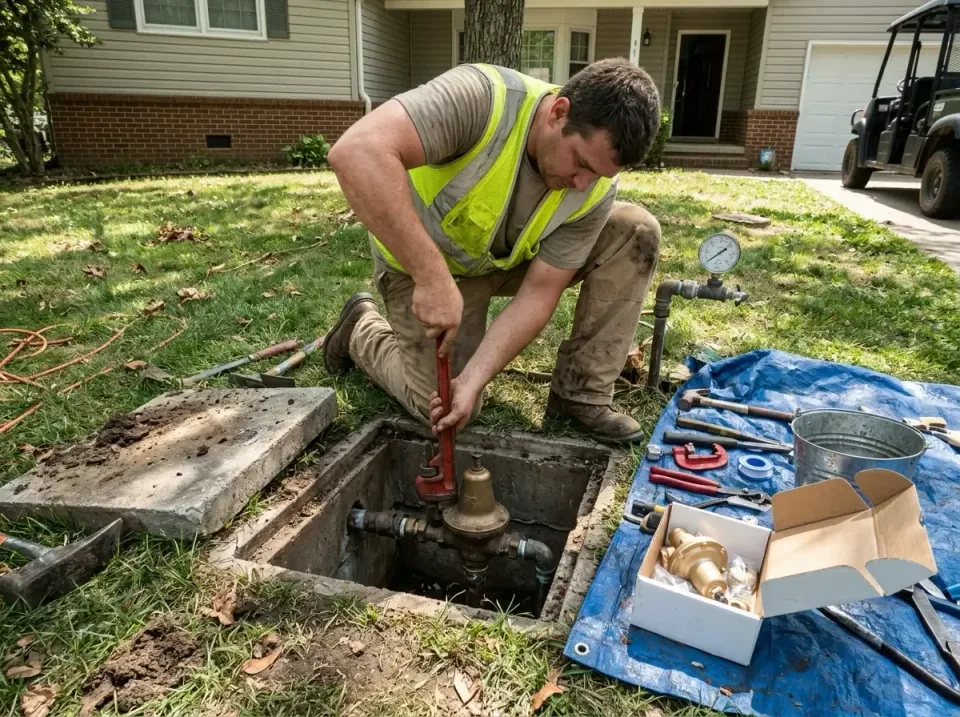
Well pump repairs for Byron, GA homes include pump-depth and failed-component diagnosis; typical repairs run $300–$1,500, driven by pump depth and parts.
At a Byron home near Big Peach Antiques Mall, a shower that weakens when another faucet runs can point to a restriction or supply problem not simply an old showerhead. Our crew checks the pressure before recommending a repair. The details matter.
Summer heat can increase outdoor water use, so irrigation and household demand may overlap and make weak flow more noticeable. During drought, private wells can be strained; if your home uses a well, note whether pressure changes after extended water use and tell our team.
We serve Byron properties, including brick ranch homes and newer subdivisions, and assess the plumbing system rather than guessing from one faucet. Our inspection can include a pressure reading and checks of accessible fixtures, shutoffs, and supply piping. We explain what we find and confirm the repair scope before work begins.
Well pump repairs for Byron, GA homes include pump-depth and failed-component diagnosis; typical repairs run $300–$1,500, driven by pump depth and parts.
We install residential booster pumps sized to household demand, including pump capacity and electrical work; typical installation runs $800–$2,500.
We repair or replace home pressure regulators, including accessible valve assemblies; typical repairs run $250–$600 depending on valve condition and parts.
Low cold-water pressure service for homeowners includes checking cold-side valves and accessible piping. Typical repair costs depend on parts, pipe condition, and access.
Water Pressure Testing compares gauge readings and fixture flow for Byron, GA homeowners; a typical test is $75–$200, depending on access and fixture count.
We trace sudden home pressure loss, including meter and buried-line issues; access and excavation needs shape the repair scope and cost.
Whole-house pressure diagnosis for homeowners includes checking the main supply and accessible piping; repair scope and access shape the cost, with final quotes based on site conditions.
We diagnose weak showers for homeowners, including showerhead and supply-side restrictions; typical repairs run $150–$500, depending on access and parts.
We repair leaking residential water lines, including buried sections; typical jobs run $300–$2,000, depending on leak location and excavation access.
Clogged water line repair clears or corrects restricted residential piping, with the work scope and access affecting a typical $300–$1,500 job.
We diagnose weak kitchen and bathroom faucets, including accessible fixture connections. Typical repair runs $100–$350, depending on faucet condition and access.
We trace fluctuating home pressure through fixture and system checks; repair scope depends on the cause, access, and parts required.
We trace weak flow between the municipal meter and home, checking accessible service-line connections; saturated soil after rain can complicate access near Macon's Ocmulgee Mounds National Historical Park, and storm d...
Low hot-water pressure service for Byron, GA homes includes tracing restricted hot-side flow and checking accessible fixtures; typical repairs run $150–$600, depending on access and parts.
Well pressure tank repair for Byron, GA homes includes tank and connection work; final cost depends on tank size, parts, access, and site conditions.
We repair residential booster pumps, checking controls, pressure switches, and accessible connections; repair scope and parts determine the final cost.
We repair residential softener valves, bypasses, and resin-bed restrictions; typical jobs may run $150–$600 depending on parts and access.
Tankless water pressure repair checks restricted heater passages and connections; the quote depends on access, parts, and the condition of the unit.
Water Filter Pressure Repair clears restricted cartridges and housings for Byron, GA homes; typical repairs run $150–$500, depending on filter type and access.
Upper-floor pressure diagnosis for Byron, GA homes includes comparing flow at fixtures on different levels; access and the cause determine the repair scope and price.
The Byron Depot Museum gives our team a familiar local reference point, while heavy rain can saturate soil around buried water lines and make an existing service-line leak harder to spot from indoors. Seasonal rainfall can also affect groundwater and well performance, so we ask well owners when the pressure change began and whether it follows dry or wet weather.
Our team schedules service for homes and properties in Byron, checks the pressure and likely causes, then explains options and confirms the scope before work starts. Storm debris may delay utility or repair access after severe weather, so we coordinate routing from Georgia dispatch and keep customers informed. High humidity can also promote indoor condensation; we distinguish damp surfaces from an actual plumbing leak before recommending repairs.
If a shower weakens when faucets run or pressure falls throughout the house, start by checking whether several fixtures are affected. Byron’s hot, humid summers increase plumbing-system demand, and overlapping household use can expose a marginal supply or restriction.
Inland areas generally avoid direct storm surge, but that does not prevent local supply problems. During Atlantic hurricane season, June through November, Byron customers may also see brief service interruptions associated with storm conditions.
Our team tests pressure at more than one fixture, checks accessible valves and piping, and looks for restrictions or leaks before proposing work. At a Byron home, you can safely compare two taps with other water use turned off; note whether the change is house-wide or limited to one fixture. We serve ZIP code 31008. Bring in our crew when the drop persists or several fixtures are affected.
Byron’s occasional severe storms make an indoor pressure check useful when a homeowner notices weak flow after weather changes; our team compares readings at fixtures before tracing a suspected restriction. Winter conditions vary across Georgia: the hard freezes common in North Georgia are less typical here, but exposed plumbing can still need attention when temperatures shift.
Freeze-thaw cycles can stress exposed pipes, so our crew checks accessible plumbing for damage rather than assuming a pressure change comes from the municipal supply. A North Georgia freeze is not a Byron forecast; it is a reminder that statewide winter patterns differ.
Near North Peach Park, residents can make a safe first check by comparing a kitchen tap and bathroom faucet with other water use paused. If both remain weak, we can test the system and explain the next repair step.
A pressure repair that changes drinking-water piping must preserve safe, code-compliant connections; near Byron City Hall, our team confirms the repair scope and checks applicable requirements before altering a system. Title 12, Chapter 5, provides a state framework for protecting drinking water, so components and connections matter when work touches the supply.
Atlanta Department of Watershed Management is an Atlanta agency, not Byron’s local authority; Byron property owners should confirm any permit or inspection requirement with the authority having jurisdiction for their address. We do not present Atlanta permitting as Byron enforcement. For low cold-water pressure, we check the affected fixtures and supply path, then verify post-repair pressure at multiple fixtures so the result is not based on one tap.
Get a clear diagnosis and repair choices from Georgia Plumbing Pros.
Georgia Plumbing Pros has served homeowners for 10 years. Experience with older homes and changing water systems helps the team look for the cause of weak pressure instead of guessing at a repair.
The team coordinates appointments across Georgia and confirms symptoms and the service location before dispatch. Georgia-licensed plumbing professionals handle the work, and the company maintains insured plumbing operations.
Faucet sputtering can be an early clue that water is not flowing steadily. Notice whether it happens repeatedly, and note which fixture is affected. That detail can help a plumber narrow down where to investigate.
Dampness around exposed pipes or valves may point to a leak that deserves attention. Look for recurring moisture or new staining, but avoid disturbing the piping; share where you noticed it when arranging an inspection.
Spring is a useful time to address pressure concerns before outdoor watering and household routines change. A technician can test multiple fixtures and identify whether the issue appears limited to one area or affects the whole home.
Hot, humid summers are part of plumbing life in Georgia, but weak pressure still needs a proper diagnosis. Arrange testing when it interferes with daily water use, and let the technician know if storms affect access to the property.
Fall offers a good opportunity to check a pressure problem that has been easy to put off. The technician can confirm the water source, test pressure, and explain repair options without assuming the cause.
Winter is also a practical time to investigate low pressure, whether the concern began recently or has continued for a while. Occasional severe storms can affect access, so mention any site conditions when coordinating the appointment.
Compare Hot and Cold
Before: Hot water pressure is weaker than cold at the same fixture, making it difficult to tell whether the issue affects the whole supply or only the hot-water side.
After: The technician tests pressure and checks multiple fixtures, then explains the findings and repair options before work begins. Post-repair pressure is verified at multiple fixtures.
Georgia Plumbing Pros states that its plumbing professionals are Georgia-licensed. Confirming who will perform the work helps you understand the provider’s qualifications before arranging service.
Ask how the team confirms your symptoms and service location and coordinates the appointment. Knowing what information to provide can help avoid confusion about where and why service is needed.
Ask whether the technician records static and flowing pressure, checks multiple fixtures, and confirms your water source. Knowing the inspection scope helps you understand what the findings will be based on.
Ask whether the technician may need access to fixtures, exposed piping, valves, or pump controls. Preparing access in advance can make the on-site assessment more straightforward.
Request a quote online or contact our Byron, GA team directly by phone or email.
Pause other water use, then compare a kitchen faucet with a bathroom tap. If both are weak, note whether the change affects hot, cold, or both and share that with our team. In Byron, a persistent drop across several fixtures calls for a pressure and supply-path check.
Heavy rainfall can saturate soil around buried water lines, which may complicate locating an existing leak. Rain alone does not confirm a leak. Our team checks pressure and accessible piping to identify whether the issue is on the property’s supply line or elsewhere.
We compare pressure across multiple fixtures, inspect accessible valves and piping, and explain the likely cause before recommending work. Our team confirms the repair scope with the Byron property owner before starting.
Low Water Pressure Repair is also available in these nearby communities across Georgia.